

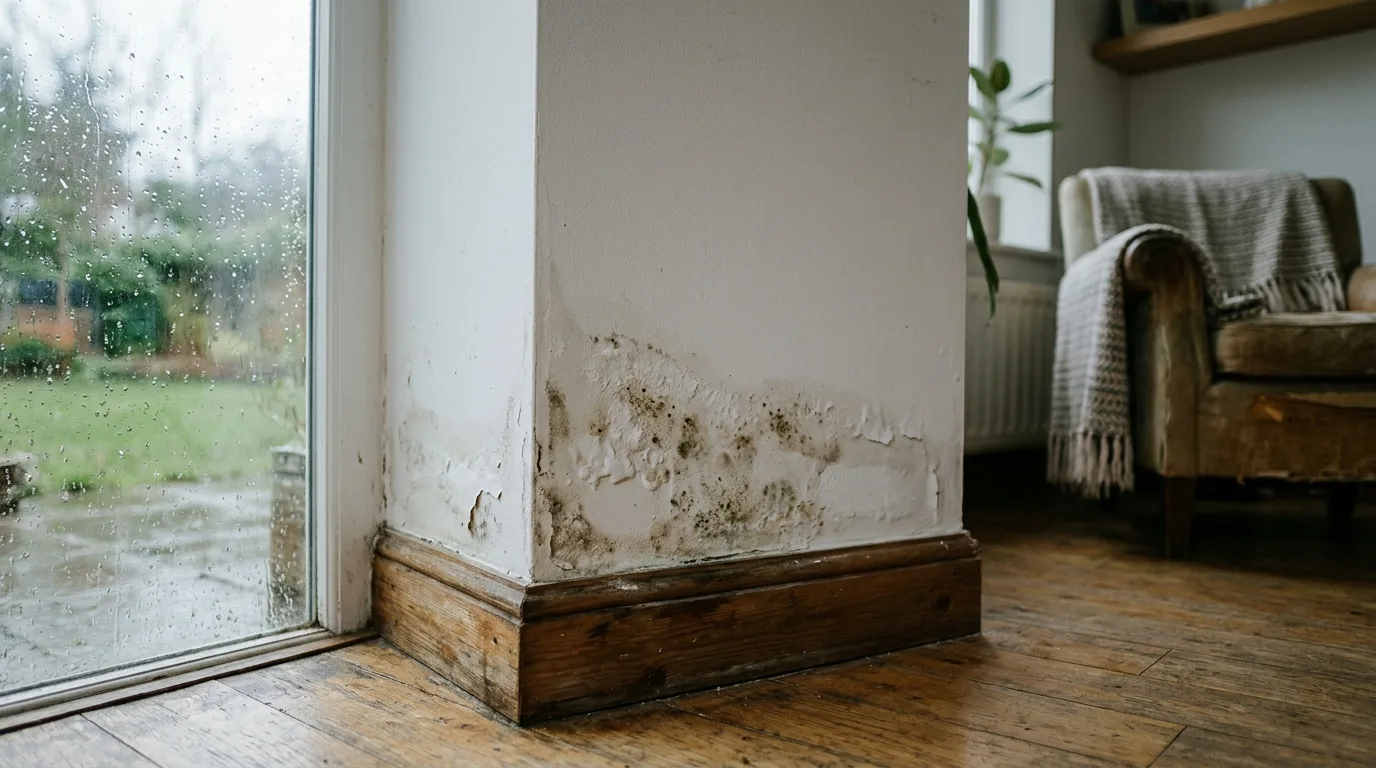
A musty smell in the house can point to serious problems, from poor ventilation to mold that is just getting started. Air fresheners only mask it for a short time. The smell will not fix itself.
Rainy weather sets up the conditions for it: humidity is high, there is little sun, and the air stands still. A damp smell can mean mold and fungus, so it is worth working through it step by step. Below are the usual sources, room by room, what changes after rain and when the AC runs, and what you can check yourself. When the damp has already done real damage, that is a job for a water damage restoration team in Carlsbad.
Why Does My House Smell Musty: Where It Comes From
A steady smell of damp or rot means microorganisms are giving off specific substances. Mold is often invisible, and its presence shows only through indirect signs. Very often, though, the cause is not the overall humidity in the house but particular things that stay wet all the time: bath mats, shower curtains, towels, flowerpots.
Bathroom
Damp builds up in the bathroom, the kitchen and storage rooms when the air does not move. To check the airflow, turn on the exhaust fan and hold a sheet of thin paper to the vent grille. Ideally it should stick to it. If it falls, the vent is clogged or blocked.
Between uses, keep the door slightly open, run the exhaust fan more often, and dry the shower curtain and towels after each use. If the bathroom has no window, wipe the floor and walls dry after a shower and leave the door open for at least 30 minutes.
Under Sinks and the Tub
Check whether it is dry under the bathtub. Water from the trap or pipe joints forms a puddle, and standing water gives off a strong musty smell. If you suspect this, it is better to call a plumber. In the kitchen, watch for leaks under the sink, do not leave wet rags and sponges for long, and wipe the tile joints.
Closets
Do not put even slightly damp clothes in there. Once a week, air out the shelves and set out silica gel or baking soda.
Carpets, Furniture and Textiles
If the walls and the air are dry but the smell stays, it may be in the textiles: a couch, a rug, clothing, bedding. Rugs with a strong smell are better sent to a professional rug cleaner or replaced, because they hold moisture.
- Washing: wash at the highest temperature the fabric allows; you can add a cup of baking soda to the detergent.
- Sunlight: take blankets, pillows and mats outside on a sunny day for 3–4 hours.
- Couch or armchair: sprinkle baking soda in an even layer, leave it for a few hours, then vacuum thoroughly.
Laundry
Drying laundry indoors noticeably raises humidity in rainy weather. It is better to dry it outside on a patio or to use a dryer. If the smell has worked its way into the walls, the tile grout or the rubber seals of the washing machine, cleaning and airing out may not be enough. You need treatment that kills the mold.
Crawl Space, Basement and Garage
These need ventilation and drainage of water away from the foundation. Mold can grow in basements, attics and behind furniture without showing itself for a long time, so check these spots from time to time. If the smell persists, professional drying and treatment of the walls may be needed.
Musty Smell in House After Rain
After heavy rain, check the crawl space or basement, the lower part of the walls, and the north-facing walls. Look over the pipe joints, the area under the sink, room corners and window returns for leaks and condensation.
If the walls or floor got soaked during a downpour, or water got into the house, those surfaces need to be dried thoroughly. Also check where the rainwater goes. If it pools near the foundation, dig drainage channels or correct the slope of the ground along the house.
Windows that fog up all the time and collect condensation create good conditions for mold. Everything around them should be checked carefully.
Musty Smell When AC Is On
Mold gets into household appliances, especially air conditioners and humidifiers. Because of it, the unit does not work properly or gives off an unpleasant smell.
Filters are often washed first, but the source of the smell is usually deeper, on the evaporator coil. Condensation forms on it constantly during cooling. If dust, pet hair and pollen are added to the moisture, a biofilm forms on it, and that is what gives the stale or moldy smell. The main causes:
- Dirty filters. Filters clogged with dust and hair worsen air circulation, and part of the debris settles inside the unit.
- A dirty evaporator. It is cold and wet, so dirt builds up there fastest. Many HVAC technicians consider it the main culprit.
- A clogged drain. If condensate stands, the inside stays wet and microorganisms grow.
- Long idle periods. Over several months of not running, dust and moisture can build up in the unit, so the first start of the season sometimes comes with a stale smell.
What you can do yourself:
- Filters: check the air filter once a month and clean or change it when it looks dirty.
- Fan mode: after cooling, keep the unit on fan for 10–20 minutes to dry the inside.
- Drain: make sure the drain line does not clog.
- Before the season: do a preventive cleaning; after a long idle period, clean the filters and let the unit run on fan for a few minutes before using it to cool.
Dry mode is for when a room feels stuffy from humidity rather than heat. The compressor runs in bursts and the fan turns slowly, so the air passes through the cold heat exchanger longer and more water condenses out of it. It is especially useful in rainy weather.
Call a service technician if the smell does not go away after cleaning the filters or comes back quickly, mold is visible inside, the unit cools worse, water drips from the indoor unit, or there are unusual noises.
Musty Smell in House but No Mold: Hidden Leak or Humidity?
Mold is not always black or green. Spots on walls or ceilings can be brown or gray. Mold also changes the color and texture of paint, wallpaper and wood: for example, paint darkens and starts to peel.
Allergic reactions are another indirect sign. In some people mold causes a runny nose, cough, itchy skin or eyes. If someone in the family has these symptoms, mold may be the cause.
If the house has vinyl windows with tight seals, natural ventilation hardly works. Moisture and smell build up because of it. Humidity of 45–60% is considered optimal, and a hygrometer is handy for measuring it. If you treat mold yourself and the fungus keeps coming back, it is more useful to look for a hidden source of moisture, such as a leak or failed waterproofing.
Why Does My House Smell Musty All of a Sudden: Quick Checks
- Air it out when the air outside is drier than inside; on muggy, rainy days run the AC or a dehumidifier instead.
- Check the vents. Hold a sheet of paper to the running bathroom fan and the kitchen range hood; clean the fan cover and the hood filter.
- Look for standing water. Under the tub, under sinks, around traps and pipes.
- Find wet things. Mats, curtains, towels, flowerpots; in the pots you can replace the top layer of soil and water less.
- Dry the air. A household dehumidifier is considered the most reliable option. Alternatives are silica gel, salt or baking soda in closets, storage rooms and under the tub.
- Treat hard surfaces. Tile, glass and plastic can be wiped with a 1:3 vinegar solution; for light-colored materials and grout, 3% hydrogen peroxide works — leave it 10–15 minutes, then rinse and wipe. Test peroxide on a hidden spot first, since it can lighten colored surfaces. Ventilate after any treatment.
Protect your hands and lungs when you remove mold yourself: spores rise into the air easily. Wear gloves and a respirator, and only take on a small patch. Never mix ammonia with bleach.
Do not try to cover the damp smell with air fresheners alone. They do not solve the problem, they only mask the smell. The EPA's brief guide to mold and moisture covers the same basic idea: deal with the water first.
When to Call the Pros
Black, gray or green spots on porous materials often cannot be removed with soap. You need antifungal products, and in advanced cases, professional help. If the smell keeps coming back or the mold patches keep spreading, it is time for professional drying and disinfection. For growth inside walls, under floors or across large areas, see our mold remediation services in Carlsbad. Mold is especially dangerous for people with weakened immune systems, children and the elderly. If the smell comes with feeling unwell, allergies or a cough, see a doctor.
If the work means moving furniture and boxes out of damp rooms, read how to protect valuables during restoration. Business owners can check keeping your business open during restoration.
You can learn more about our restoration company, read what Carlsbad customers say about us, browse more articles on our blog, or go back to the restoration company homepage.