

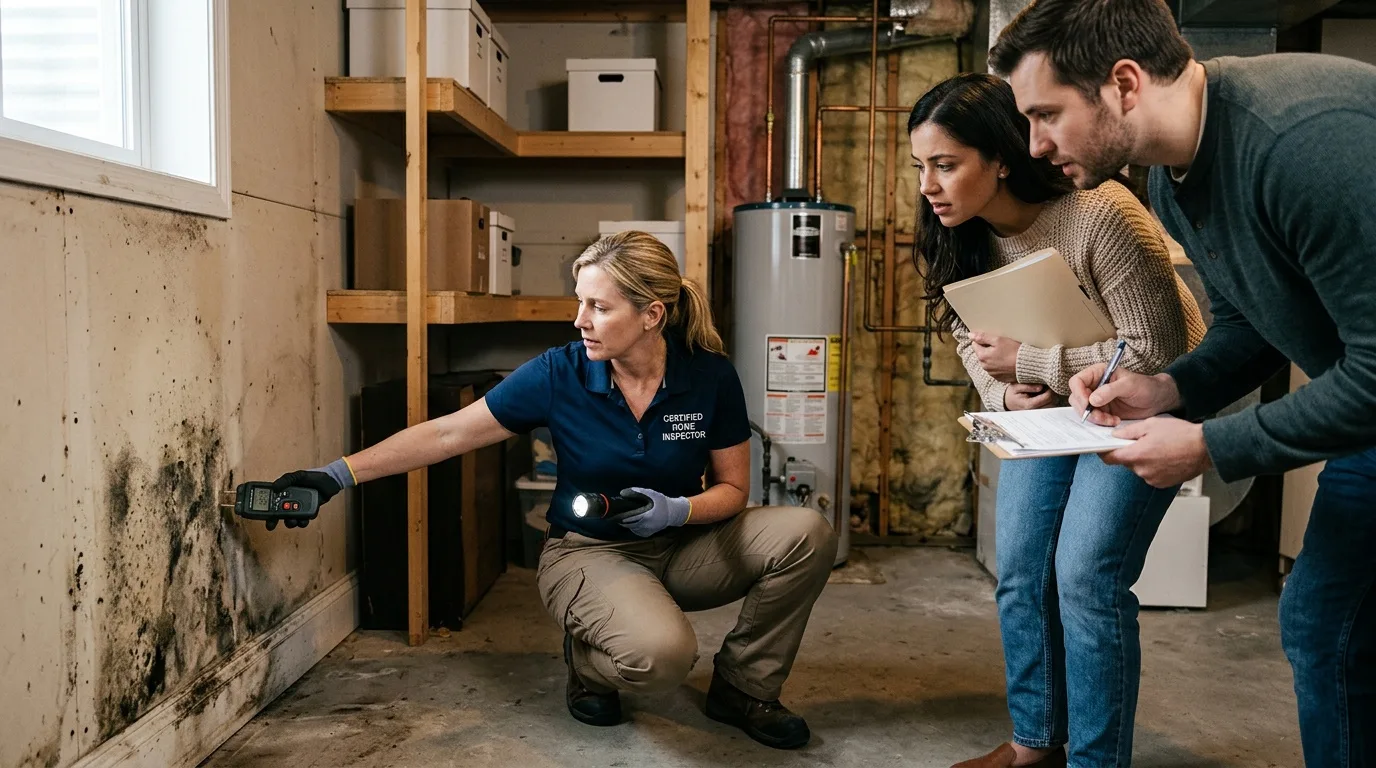
It seems that during a showing a buyer can spot every flaw on their own, since the house is right there in front of them. In fact, no. Someone without experience simply won't notice many things. Even more so if the seller got ready in advance: did a cosmetic refresh, touched up paint here and there, and tried to hide from the buyer everything they would definitely not like.
Fresh renovation before a sale is not always a gesture of goodwill. Sometimes it is a way to hide defects the buyer is not supposed to notice before signing. Fresh paint in one corner, new baseboards, a freshly textured ceiling — all of these upgrades can cover leaks, cracks and mold, which later turn into headaches and unexpected costs. Below is what to look at when buying a house with mold suspected, what to ask the seller, and what to do if mold shows up after you move in.
Signs of Mold During Showings
At a showing, switch into "scout mode" and study the house very carefully for serious defects. So which defects are we looking for, and in which situations should a red flag go up?
A strong, persistent damp smell
In older homes the smell can hang through the whole house; the walls simply soak up this "aroma." As a rule, it means a drain line is constantly leaking, the crawl space is damp, the pipes are in poor shape — and constant dampness leads, at the very least, to mold on the foundation and walls.
Yes, sometimes the damp smell is temporary, and many sellers assure buyers that there was just a leak the other day. Fine, maybe. Then take a pause and come back in a few days. If the problem has not gone away, it will not go away for a long time. Maybe never.
Mold often gives itself away by its smell even when you can't see it.
Stains, bubbles and fresh paint
Water stains, swollen wallpaper, peeling plaster, bubbling spots on painted surfaces — all of this says the ceiling or walls are getting wet. If it happens all the time, there is almost certainly mold in the house, and it is bad for your health.
Sellers of such homes often try to hide the real state of things and paint the walls or hang new wallpaper before the sale. So fresh renovation should make you more alert. Don't just look at the walls — touch them, especially the corners, where moisture often collects.
- Corners and exterior walls. Pay special attention to room corners, window returns, spots behind furniture and walls facing the street. Any stains, swelling or small changes in color can be signs of hidden mold.
- Ceilings. Signs of past flooding show up even after cosmetic repairs. Look closely at ceilings in the corners and where plumbing runs through. Sometimes the surface looks even but differs in shade or texture.
- Behind pictures and furniture. Don't be lazy — look under the pictures and move light furniture, say an armchair, away from the walls. This is a common way to cover traces of leaks or mold.
- Floors. Check whether the floor is level and whether it creaks or sags when you walk. Ask the inspector to check the floor near bathrooms and the kitchen with a moisture meter.
- Above the ceiling. Ask your home inspector to look into the attic and above the ceilings.
The attic and the ceiling under the roof
If the roof leaks, there will be water stains. Inside the rooms they are usually painted over before a sale, but in the attic everything is visible. Buying a house with mold in the attic often starts exactly here, so ask the inspector to look at the roof framing from inside. Walk the whole perimeter of the walls: are there leak marks running down the walls from the ceiling?
The bathroom and ventilation
Faulty plumbing is a serious problem and hard to fix. So in the bathroom you need to examine everything you can. Visually check the outside of the pipes and joints. Buildup or rust can mean the pipe walls have worn on the inside too. Look at all the drain connections. Foreign objects and sealant smeared on joints are a warning sign. Flush the toilet and make sure the water drains easily and the toilet does not leak.
The classic ventilation check: close all the windows and turn on the bathroom exhaust fan. Hold a sheet of paper to its grille. The paper should stick to the vent. If it falls off, the ventilation is working poorly.
Mold in the bathroom and unpleasant smells in the house can also point to ventilation problems. So wide-open windows at a showing, or a sharp smell of incense, are a reason to be on guard. The smell of baking or coffee is nothing to fear: it won't cover bad odors, it is usually just a harmless way to make the showing feel like home.
Ask the neighbors
You should simply ask the neighbors, several if possible, on both sides and across the street.
Asking the neighbors is one of the most reliable methods. Come to the street where you want to buy without the seller and talk to the people who live there. They can tell you things an inspection of the house will not.
Home Inspection vs. Mold Sampling
A moisture meter is a portable device that shows the percentage of moisture in a wall or floor. A thermal camera, which can be rented, shows how temperature spreads across a surface: cold spots, cold window returns. A good home inspector brings a moisture meter and often a thermal camera.
A mold inspection when buying a house is not the same as lab sampling. According to the EPA, there are no EPA or other federal limits for mold or mold spores, so sampling cannot be used to show that a building "passes." If mold is visible, sampling is usually not necessary. The details are on the EPA's page on mold testing or sampling. Home test kits from the store don't settle the question either.
What matters more is where the water comes from and how far the damage goes. When there are signs of a past leak, a water damage restoration crew can check whether the materials are still wet, and a professional mold remediation team can look at what would have to come out.
Disclosures to Ask For
After you sign the closing papers, claims against the seller get much harder. So everything you want on paper should be asked for before that.
- Past leaks and repairs. If you see an old dry stain, ask when it happened and what was repaired.
- Hidden connections. Ask where the plumbing joints are and whether they can be reached through an access panel. Joints hidden in walls are harder to check for a leak.
- Recent renovation. A separate warning sign is a renovation done very recently, with the house put on the market right after. It may mean the workers rushed the job: hung wallpaper on walls that had not dried, laid flooring over a damp base.
- Complaints in similar homes. Ask whether owners of similar houses on the street have complained about damp.
For mold disclosure in California, the state publishes the Residential Environmental Hazards booklet for buyers, which has a section on mold. Read it before you sign, not after.
Negotiating: Repairs or Credits
In older homes the real scope of work is often known not before the work starts but after demolition. Only then can you see the true state of the walls, floors and plumbing. Even if the flooring looks good and does not creak, defects often hide under it. The most annoying part is that you can't predict those costs without opening the floor. So when buying a house with mold remediation ahead, the talk with the seller usually comes down to one of two things:
- Repairs by the seller before closing, with the source of the moisture fixed first, not just the stain painted over.
- A credit or a price reduction, so you do the work yourself after closing.
If you go with the second, plan the work into your budget ahead of time.
Finding Mold After Buying a House
Many buyers get plenty of work along with the house, and mold and damp often give the most trouble. A common start is to have the wallpaper taken down, have the walls treated and air the rooms well until the walls are clean and dry.
Floors damaged by moisture often swell and have to be replaced. Furniture worth keeping can be sent out for restoration. If you are clearing rooms for this kind of work, here is how to protect valuables during restoration, and larger moves can go through our pack-out and contents storage.
Separately, keep working on the cause of the damp, for example drainage along the walls. Before insulating, you first need to find and remove the source of the moisture.
Where the Moisture Comes From
Constant dampness in a house has a cause, and the stain on the wall is only the result. Here is where it usually starts.
- The roof. If there are leak marks under the ceiling near the top of the house, the roof leaks, and that can become a problem.
- Plumbing. If water came from inside, look for the leak marks around the bathroom or the kitchen sink. Rusted pipes and leaking joints inside the walls belong here too.
- The crawl space and drains. A constantly damp crawl space and leaking drain lines mean mold on the foundation and walls sooner or later.
- Ventilation. Mold in the bathroom and bad smells often point to a vent that doesn't pull air.
- Window returns. Any peeling paint on the returns, stains, changes in color — a sign of high moisture.
Our Carlsbad team handles water, fire and mold work. You can read more about our restoration company, see what local homeowners have said, browse other articles in our news section or go back to the restoration company home page.