

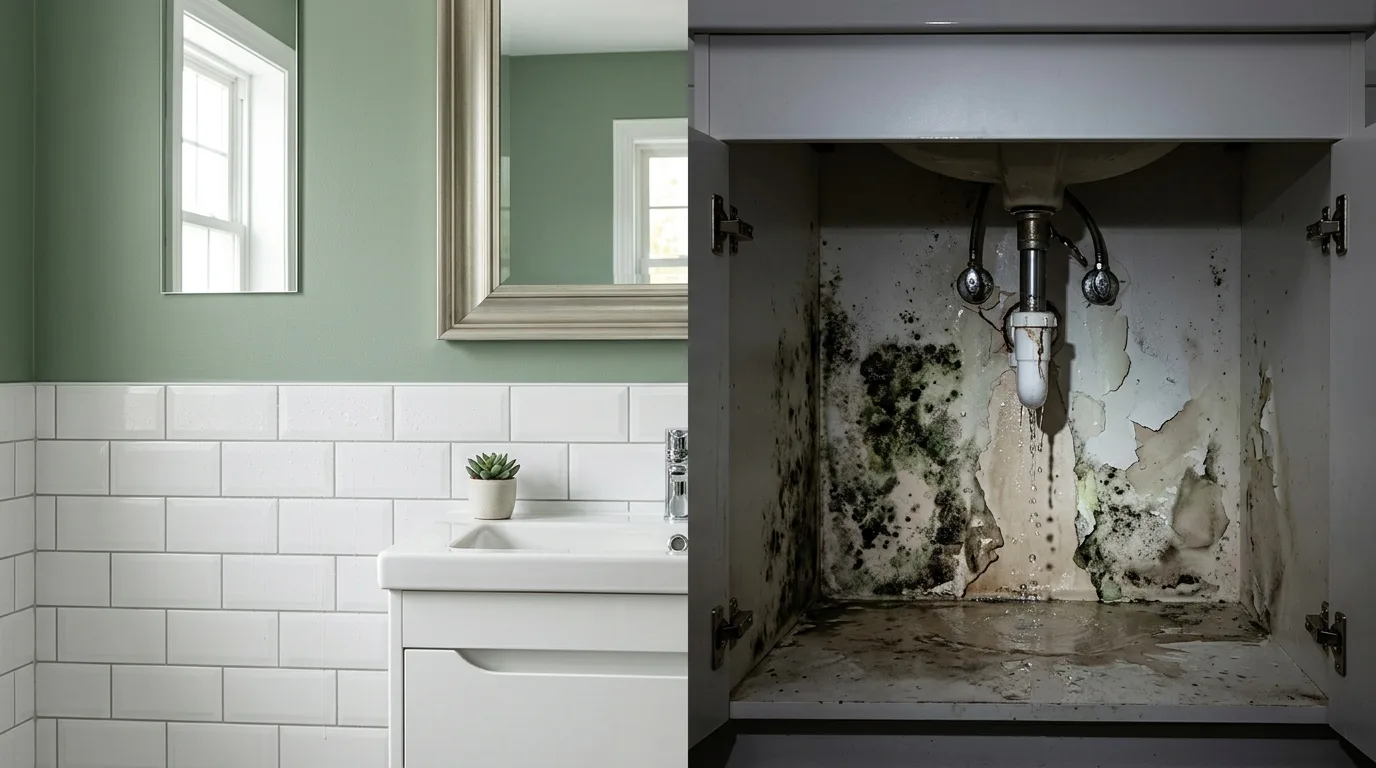
A bathroom is hard on materials. There is constant moisture, the temperature goes up and down, and every surface takes it. If the materials are picked badly, mold and fungus show up, and the repair has to be done again much sooner than planned. After a leak or a flood the same questions come up for other rooms too: what to put back on the walls, and will mold resistant drywall and mold resistant paint keep the problem from coming back.
Drywall is a common and cheap way to level walls and ceilings. In bathrooms, though, more and more builders question it. Below is what the special boards and paints actually do, what their weak points are, and where other materials handle a wet room better.
What "Mold-Resistant" Actually Means
The word on the label is "resistant," not "proof." A moisture-resistant board has a treated gypsum core and a facing that takes on water more slowly. The gypsum is mixed with silicone and treated with antifungal compounds. That slows things down. It does not make the board waterproof.
So, is mold resistant drywall waterproof? No. It does not hold up to long contact with water, even with tile glued over it. Water vapor passes through even the moisture-resistant version, condenses inside, and the breakdown goes faster.
Why Regular Drywall Fails in Wet Rooms
To compare mold resistant drywall vs regular board, start with what goes wrong with the regular kind:
- Swelling. Gypsum soaks up water fast. The board swells, warps and in the end falls apart. You see it as peeling finish, cracks and a costly repair.
- Vapor and condensation. Steam goes through the board, turns to water inside the wall and stays there.
- Joints, screws and damage. Seams, screw points, scratches, cracks, holes from shelf mounts. Each one is a way into the core. Some installation mistakes and some accidental damage are almost unavoidable, and a damaged board usually means cutting out and replacing a section.
- Service life. Even moisture-resistant drywall with good protection wears out in a bathroom sooner than in a dry room. Under harsh conditions, sooner still.
- Mold. Dampness feeds mold and fungus. This is not only about looks.
Mold can trigger allergies and asthma symptoms in sensitive people. A wet wall with mold in it is a health issue first, a cosmetic one second. If mold is already growing, have it removed before anything new goes up over it.
Board Types in General
Several kinds of gypsum board exist. In homes the regular and the moisture-resistant ones are used most.
- Regular drywall. Off-white face paper. For ceilings and partitions in dry rooms. It does not tolerate moisture.
- Moisture-resistant board. Green facing. Used in kitchens, powder rooms and bathroom areas away from the shower. In the US this is what is usually sold as "green board."
- Fire-resistant board. Reinforced with glass fiber and holds up to fire longer than regular board. It goes into furnace rooms, electrical rooms and garage walls. In the US these boards are labeled Type X or Type C.
- Fire- and moisture-resistant board. For wet rooms where there is also a fire risk.
Green Board vs Purple Board
The colors work as a code. Green means moisture-resistant. In US stores you will also see purple-faced board, sold as resistant to both moisture and mold. When comparing green board vs purple board, the same limit applies to both: they are made for rooms with moderate humidity, not for surfaces water hits directly. For the seams, mold-resistant joint compound is sold as well. It covers the joints, which are exactly the weak points described above, but it does not change what the board can take.
Where Moisture-Resistant Drywall Is Used, and Where It Isn't
This part is only a partial answer. The core is treated, the facing resists moisture, and still:
- Constant water contact and direct splashes are too much for it. A small scratch on the surface lets water in.
- It costs more than regular board.
- Even with waterproofing coatings it is not fully sealed. Reliable protection needs careful waterproofing, which adds cost and work.
- It is not recommended for showers. It fits rooms with moderate humidity, for example ceilings. For walls that get wet, it is a poor choice.
For mold resistant drywall for bathroom use, the realistic places are pipe chases, ceilings and walls away from the tub and shower. Gypsum board in general is not suited to very wet rooms like a steam room at all.
After a leak, the same logic applies to any room. Wet drywall that has swollen or grown mold is cut out, the framing behind it is dried, and only then is new board installed. That drying and the cut-out are part of water damage restoration in your home, and they come before any choice of new board.
Tile Backer in Showers
Experienced builders prefer materials that are not bothered by water: ceramic and porcelain tile. These resist mold and need little upkeep. Under tile, other boards are used.
Cement Board
Cement boards reinforced with fiberglass. They are waterproof and durable, work under tile or paint, and can be used for curved walls. They cost more. Installed correctly, they last a long time. In the US this is the usual tile backer in a shower.
Other Options
- Moisture-resistant plywood treated with protective agents. It can level walls or form partitions but needs more protection than purpose-made boards.
- Magnesium oxide (MgO) sheets. They resist moisture but need careful handling.
- Tile straight onto the wall, if the wall is sound and even, or onto special plaster for damp rooms. No sheet material at all means fewer ways for water to get in.
Mold-Resistant Paint: What the Additives Do
For homes, water-based paints are chosen most often. They barely smell and are safer than oil-based paints. The choice depends on the room:
- Kitchen. Washable paints that stand up to moisture and dirt.
- Bathroom. Moisture-resistant paints with biocide additives, for example acrylic-latex or silicone paints.
- Balcony or outdoor areas. Exterior paints. Wood needs products for outdoor work.
Look at the label for how well the paint stands up to washing. Matte paints suit living rooms. Satin and semi-gloss go in hallways, kitchens and bathrooms because they wear better.
The biocide in mold resistant paint protects the painted layer itself. It does not remove mold that is already in the wall, and it does not fix the dampness that caused it.
Preparing the Wall Before Painting
- Remove old wallpaper and paint. In a home built before 1978, test the old paint for lead first. Clean the walls of dust, grease and dirt.
- Fill the cracks with joint compound. Reinforce large defects with mesh.
- Sand, then prime. Two coats of primer if needed.
- Skim coat if wanted, then prime again.
Without the prep, the coating comes off. Even old painted walls need priming.
While painting, keep the temperature comfortable and the humidity moderate. In air that is too dry or too hot, paint dries unevenly. Air out the room. Let each coat dry before the next.
Why Moisture Control Still Matters
Whatever material is chosen, the floor, the walls, especially the wet zones, and the joints have to be waterproofed. Bad waterproofing cancels out the benefits of good materials. Good ventilation matters just as much. It keeps the air healthy and stops dampness from settling in. The EPA's brief guide to mold and moisture makes the same basic point: control the moisture, and you control the mold.
Drywall is everywhere, but it is not ideal for wet rooms, and its moisture-resistant version is only a partial fix. Cement-based boards are the practical choice where water actually hits. The final choice depends on the budget, the design and how the room is used.
If the wall is already wet or moldy, the board and the paint come later. First the source of water, then professional mold remediation for affected walls, then rebuilding. When a bathroom or a whole floor has to be opened up, furniture and belongings are often moved out first. The guide on protecting valuables during home restoration covers that step, and our pack-out and storage services handle it.
You can read more about our restoration team, see what Carlsbad homeowners say about us, or browse more articles on our restoration blog. For everything else, start at the Carlsbad water and mold restoration homepage.